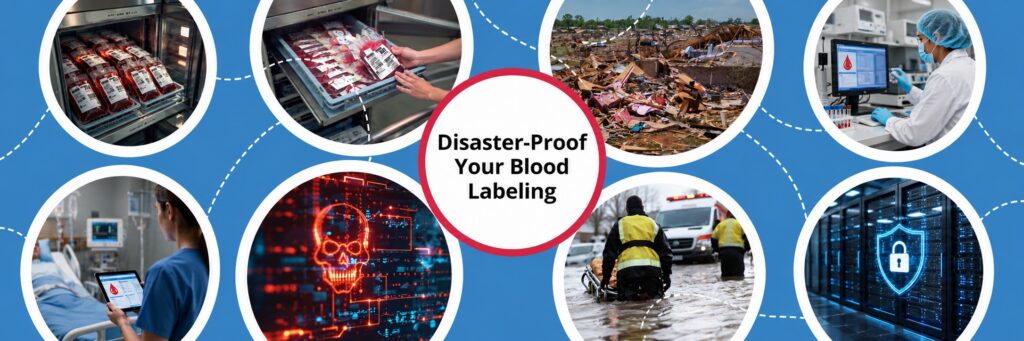
Healthcare systems rely on digital infrastructure to manage patient data, laboratory workflows, and patient identification. Laboratory Information Systems (LIS), Hospital Information Systems (HIS), and integrated software platforms play a critical role in supporting safe and efficient clinical operations.
But when these systems go offline, whether due to cybersecurity incidents, network outages, system upgrades, or unexpected failures, clinical workflows cannot simply stop.
For departments like blood banks, transfusion services, and cellular therapy, downtime creates a unique challenge. Clinicians must maintain regulatory compliance, traceability, and patient safety without access to primary systems. Effective downtime solutions allow healthcare teams to continue producing compliant labels, tracking critical data, and supporting patient care until systems are fully restored.
Why Downtime Readiness Is Essential in Healthcare
Modern healthcare environments face increasing risks of system interruptions. Ransomware attacks, network outages, and software maintenance windows can disrupt core clinical systems at any time.
For regulated workflows such as blood labeling, crossmatch transfusion tagging and cellular therapy identification, these outages create several challenges including:
- Maintaining accurate product identification and labeling
- Preserving chain-of-custody tracking
- Ensuring ISBT 128 compliance
- Avoiding manual documentation errors
- Continuing clinical operations without delays
Without dedicated downtime solutions, staff may resort to handwritten labels or manual processes that increase the risk of transcription errors, compliance gaps, and patient safety .
Downtime preparedness ensures that critical workflows remain intact even when primary systems are unavailable.
The Role of Downtime Labeling Solutions
Downtime labeling systems are designed to function independently of networked LIS or HIS platforms, allowing clinical teams to continue producing compliant labels and documentation during outages.
These solutions typically provide:
- Standalone labeling capabilities
- Barcode scanning for accurate data capture
- Automated label formatting
- Compliance with blood and biotherapies standards
By replicating the essential elements of normal workflows, downtime solutions reduce disruption and maintain operational continuity.
Key Downtime Solutions for Healthcare Labeling
1. HemaTrax® Standalone (HemaTrax SA)
HemaTrax Standalone is designed to ensure that blood banks can continue producing ISBT 128 compliant blood product labels even when LIS systems are unavailable.
Because it operates independently of network connectivity, HemaTrax SA enables staff to:
- Generate compliant blood product labels during system outages
- Maintain traceability of blood components
- Ensure proper identification and labeling standards
- Continue operations without manual label creation
For transfusion services, this capability is essential to maintaining regulatory compliance and patient safety during unexpected downtime.
2. HemaTrax-CT Standalone (HemaTrax CT SA)
Cellular therapy workflows face particularly strict requirements for chain-of-custody tracking, specimen identification, and regulatory compliance.
HemaTrax-CT Standalone provides downtime labeling capabilities specifically for cellular therapy workflows, ensuring that therapy centers can continue producing compliant labels even when primary systems are unavailable.
This approach helps teams:
- Support ISBT 128 labeling in cellular therapy environments
- Maintainaccurate specimen and product identification
- Preserve traceability for high-value cellular therapy products
- Reduce the risk of manual documentation errors
As a result, highly regulated therapy programs can maintain operational continuity and compliance during system disruptions.
3. Crosstrax® Downtime (CrossTrax DT)
CrossTrax DT is designed specifically for transfusion services, enabling blood banks to continue producing ISBT-128 compliant crossmatch labels during system outages.
When an LIS or HIS system becomes unavailable, CrossTrax DT allows staff to maintain safe transfusion workflows through a streamlined labeling process. The system enables blood banks to continue generating compliant crossmatch labels during outages while maintaining workflow continuity, patient safety, and regulatory compliance.
During downtime, staff can follow a simple, guided process to continue generating compliant labels:
- Scanning the ISBT-128 blood unit barcode
- Entering or scanning the patient MRN
- Selecting donor ABO/Rh and compatibility status
- Instantly generating a compliant crossmatch label
By eliminating handwritten labels and enabling barcode-driven data entry, CrossTrax DT helps reduce transcription errors while ensuring transfusion services remain operational during downtime.
Building a Comprehensive Downtime Strategy
Implementing downtime solutions is only part of an effective preparedness plan. Healthcare organizations should also establish clear policies and procedures to ensure teams can respond quickly when systems go offline.
A strong downtime strategy typically includes:
- Documented standard operating procedures
- Staff training for downtime workflows
- Dedicated downtime labeling systems
- Barcode scanning and compliant label formats
- Regular testing of downtime processes
By preparing staff and technology in advance, healthcare facilities can avoid operational disruption when outages occur.
Ensuring Continuity of Care
Downtime events are inevitable in today’s healthcare landscape. What matters most is how prepared organizations are to maintain safe and compliant operations when systems are unavailable.
FineLine’s healthcare division, Digi-Trax, provides purpose-built downtime solutions designed to support continuity across critical workflows. Solutions such as HemaTrax SA, HemaTrax-CT SA, and CrossTrax DT enable healthcare teams to preserve traceability, maintain regulatory compliance, and continue supporting patient care during system outages.
With the right downtime infrastructure in place, organizations can remain confident that even during disruptions, patient safety and operational continuity are maintained.