
The food industry is entering a period of rising accountability as traceability shifts into a front-line responsibility, especially for brands handling high-risk foods. Retailers, operators, and suppliers feel growing pressure to close information gaps that often appear as products move from the field or water to distribution and store shelves.
At FineLine, we understand the urgency behind this movement. Our work across global supply chains gives us a clear view of how technology can support food producers that want faster data flow and smoother collaboration with trading partners.
RFID is creating new advantages during this transformation, giving operators the ability to track high-risk foods with precision at the lot, case, or item level while meeting requirements for accurate, timely traceability data.
Producers, transporters, and retailers want solutions that create cleaner, more connected data while reducing manual effort. This moment calls for tools that fit real operations instead of slowing them, and RFID brings that capability.
FSMA 204 Requirements: A New Era of Food Traceability
FSMA 204 introduces stronger expectations for supply chain data tied to Key Data Elements and Critical Tracking Events. These events include harvesting, cooling, initial packing, transformation, shipping, and receiving.
The rule applies to foods listed on the FDA’s Food Traceability List, which covers products like produce, seafood, cheeses, and nut butters. Many operators already collect information about shipping and product conditions. Still, the challenge has always been connecting the pieces of information that sit across different systems.
The FDA wants records within 24 hours of an investigation starting. That timeline requires accuracy and quick digital access to lot codes, production data, and shipment activity.
FSMA 204 does not require a specific technology. However, many food companies are adopting tools that reduce manual work and help teams collect information in a structured format. We support this approach because easier data creates confidence as trading partners exchange information through ASNs, EPCIS files, or other standard formats.
GS1 US plays a major role in this transition by helping companies understand their responsibilities. Industry working groups have created guidelines that focus on common data language, and our team aligns closely with those standards. The goal across the industry is simple: build traceability practices that give everyone a clear picture of product movement as it happens.
The Expanding Role of RFID in the Food Industry
Food supply chains face unique pressures that make accuracy essential. Products move fast, perish quickly, and often travel through multiple hands before reaching the consumer.
RFID adds value to this environment because encoded tags carry data that scanners can read without line of sight. Cases and pallets move along conveyors, through coolers, and across loading docks while teams capture vital information in seconds.
At FineLine, our RFID labels and RFID tags support this movement with printing and encoding quality that stands up to cold-chain environments, high-speed lines, and tough packaging conditions. We also help food producers manage specialty formats such as partially printed encoded labels, integrated RFID packaging, and cold-resistant adhesives. Our team also supports machine-applied labels built for accuracy at high volume.
Growing Adoption Across the Industry
Operators view RFID as more than an identification tool. It becomes a link between physical goods and digital events that describe where products came from, where they are going, and which lots belong together.
Many retailers are already testing RFID for case-level tagging to support FSMA 204 needs. As pilots expand, brands want confidence that their tags carry accurate EPC data. They also need each scan to reflect the correct GTIN, lot number, and shipment association.
Our FASTtrak platform strengthens this process with accurate data management and real-time order status updates. It supports the fast turnaround times that our clients rely on, so their operations keep moving with minimal delays.
How RFID Can Help FSMA 204 Compliance
RFID technology gives food companies a practical path toward FSMA readiness because it simplifies the process of gathering data tied to Critical Tracking Events. Records must reflect what happened, where it occurred, and when it took place. RFID captures these details quickly, which adds value across the chain.
- Faster Data Capture
Teams can scan full pallets or multiple cartons at once during receiving, loading, or quality checks. This speed helps operators tie the shipment to the Advanced Ship Notice and confirm that lot codes match the data sent by suppliers.
- Accurate Lot and Date Association
RFID supports tight control around lot codes, production dates, and transformation events. This matters for processed foods that combine multiple ingredients. Operators capture ingredient-level data at intake and connect that information to the final product without slow manual steps.
- Stronger Audit Readiness
FSMA 204 requires that records remain accessible for twenty-four months. FASTtrak allows users to store and retrieve order information, shipment data, GTIN details, and encoded tag associations in a structured system. If the FDA begins an investigation, teams can respond quickly and accurately.
- A Universal Language for Trading Partners
RFID works with GS1 identifiers such as GTINs and GLNs. This gives operators a shared data language that allows systems across suppliers, distributors, and retailers to link events without confusion.
Real-World Applications of RFID in Food Operations
Many operators have already demonstrated what RFID can accomplish in food environments. Major retailers in grocery and foodservice continue to run with RFID used on cases of seafood, produce, and packaged foods.
These pilots help partners test how tag placement, read rates, cold-chain environments, and conveyor speeds influence data capture. Results often show stronger inventory control, better product rotation for freshness, and clearer traceability during receiving.
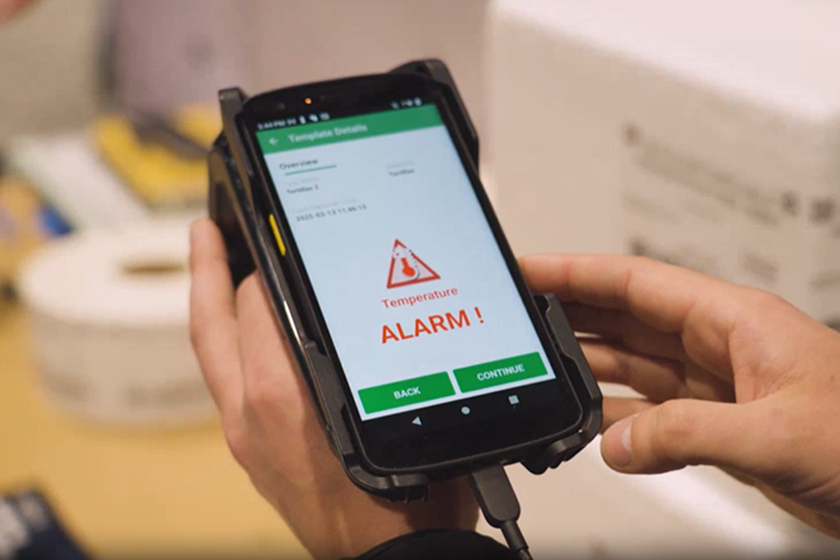
Our clients benefit from these insights as they explore their own programs. We help them approach tagging with materials, adhesives, and encoding structures built for the operational realities they face. Space constraints, label durability, automated application lines, and cold temperatures all influence label design, and we guide brands through those decisions.
Benefits Beyond Compliance
While FSMA 204 is driving adoption, the value of RFID extends far beyond regulatory requirements.
- Better Inventory Accuracy
RFID gives teams a precise picture of which lots sit at each stage of the chain. This reduces out-of-stocks, shrinkage, and misplaced inventory.
- Fresher Product Flow
Accurate lot and date tracking helps operators rotate inventory based on real conditions. This contributes to better product quality for consumers.
- Faster Recall Response
RFID supports rapid pinpointing of affected lots, which helps brands act quickly in recall situations. Teams can identify where impacted products sit across stores, distribution centers, or in transit.
- Stronger Collaboration with Retailers
Retailers want suppliers to be prepared for data exchange that aligns with GS1 standards. RFID supports this alignment and reduces delays when new requirements roll out.
- Greater Productivity
Teams that scan products with RFID avoid the slow manual entry process. It helps staff stay focused on operations rather than data collection.
A More Connected Future for Food Traceability
RFID brings new clarity into food operations as FSMA 204 draws closer. Food brands want a traceability strategy that supports fast, accurate data flow from start to finish, and our RFID capabilities help build that foundation.
With the right mix of technology, label design, data management, and quality control, operators gain a system that supports safety goals while improving daily performance across their supply chains.
FineLine is ready to help your organization build a stronger traceability program with the speed and accuracy that today’s food industry requires. Connect with our team to explore how RFID can support your next steps.
FAQs
- What are the benefits of using RFID labels in the food industry?
RFID labels help food operators capture data with speed and accuracy. Teams scan items without line-of-sight, which supports fast movement through receiving, packing, and shipping. RFID also reduces manual entry, supports lot traceability, and strengthens product tracking throughout the chain.
- How do RFID labels support FSMA recordkeeping and audit readiness?
RFID captures the data required for Key Data Elements and Critical Tracking Events. This gives food companies a structured way to access records tied to harvesting, shipping, receiving, and transformation events. With FASTtrak, teams can access stored data quickly when the FDA requests information.
- Why should food manufacturers and retailers partner with an RFID label provider?
A great RFID program depends on accurate encoding, durable label materials, and consistent performance through cold, moisture, or high-speed automation. A dedicated partner delivers the encoding precision, quality control, and technology guidance needed for traceability at scale.
- What’s the difference between RFID and traditional barcode labels?
Barcode labels require line-of-sight scanning and capture data one item at a time. RFID tags can be scanned in bulk without direct alignment, which speeds up data collection and supports more detailed product tracking.
- What data do RFID labels capture for FSMA traceability requirements?
RFID labels can capture GTINs, lot codes, production sites, dates, serial numbers, and shipment details. This supports FSMA expectations for data tied to Critical Tracking Events.
- How does RFID strengthen recall management and response time?
RFID allows operators to pinpoint affected lots across facilities, trucks, or stores in a fraction of the time required with manual records. Faster identification supports rapid removal of affected products and reduces the impact on consumers.